Eight Generations of Family Heritage
Since 1836, our family has been dedicated to caring for our land and animals. Discover the rich history and traditions that make Mid-Knight Dairy, LLC a true testament to generational farming excellence.
Beginning of the Dairy
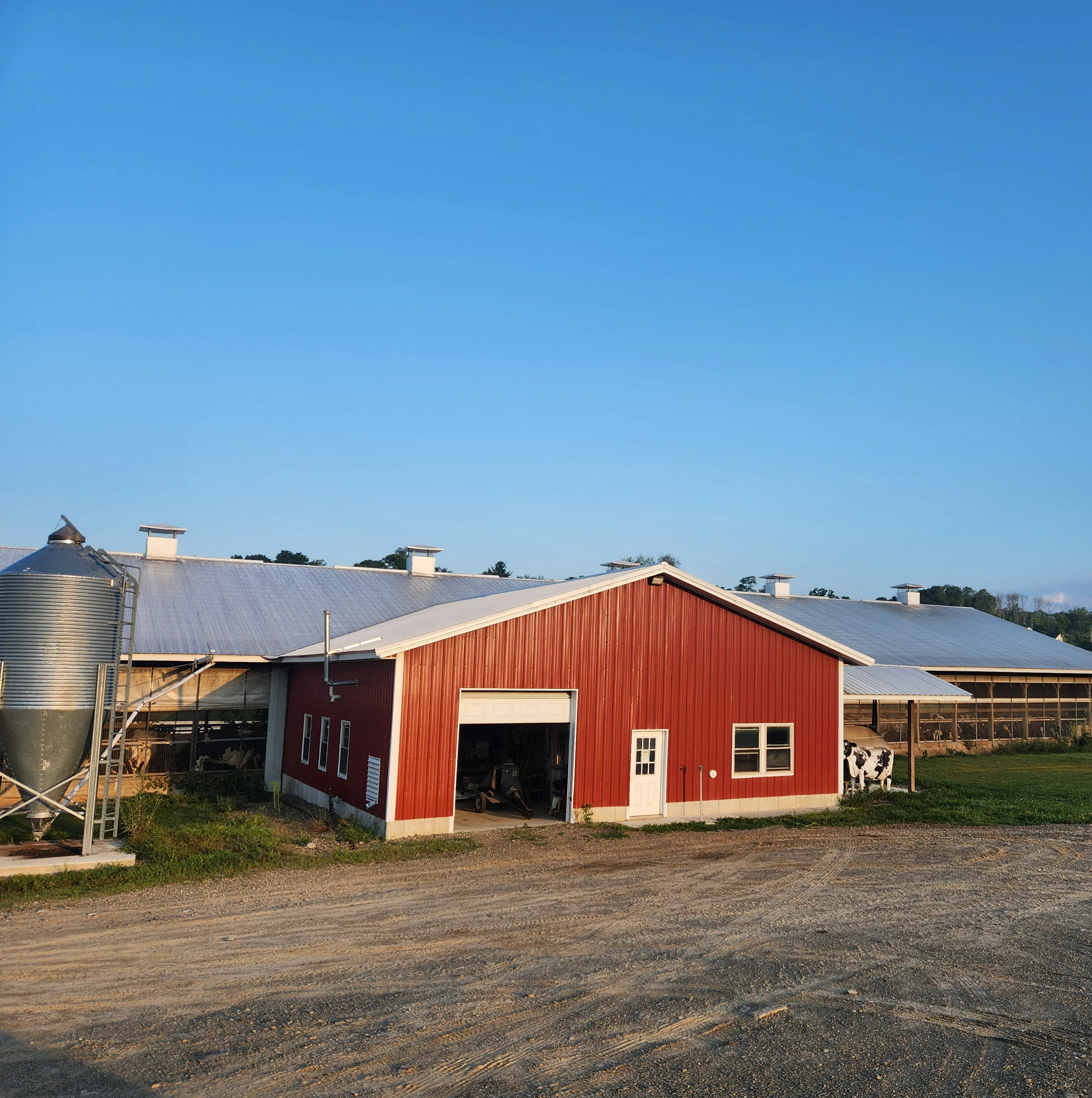
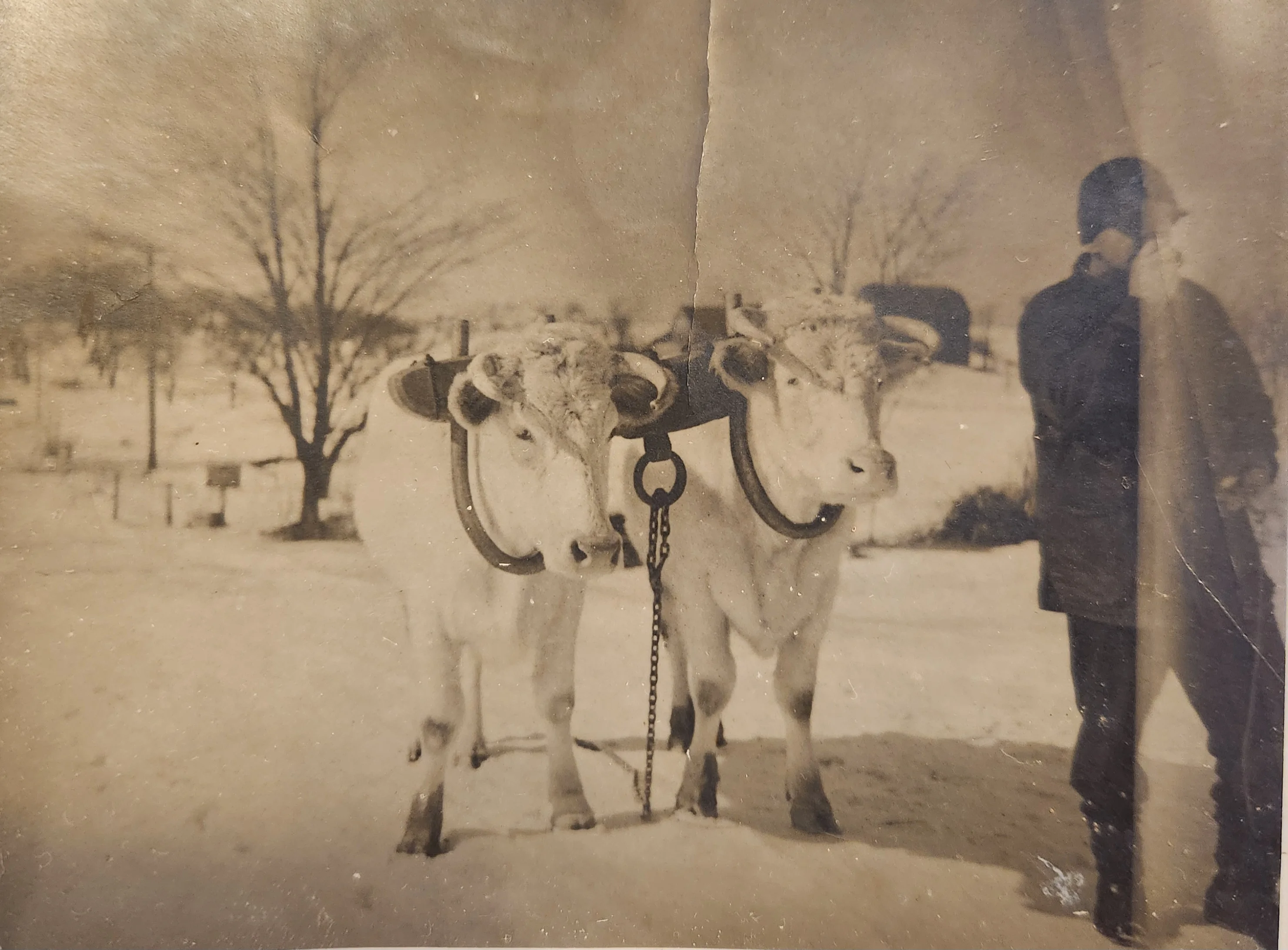
The farm has gone through many changes since 1836. Initially it was like most farms in the area, relying on a variety of sources of income including lumber milling, window making, selling butter to neighbors from milk from a small string of cattle, and other jobs off the farm. Then John’s parents, Betty and William Knight began shipping milk from a herd of 30 cows in 1963, to Steamburg Milk Producers Cooperative. The dairy grew to 60 cows in 1982 under John and Laura’s care, and grew again to 150 cows, as the LLC was formed to include daughter, Julia, and her husband Travis. A new freestall barn was built in 2016 and two Lely robots were purchased in 2022 to milk 110 cows while still milking 40 cows in the tiestall facility. Rolling herd average is around 28,000 pounds per cow with 4.1% butterfat and 3.2% protein. The farm has received numerous awards for quality milk, quality bred Holsteins and Dairy Farm of Distinction.
History
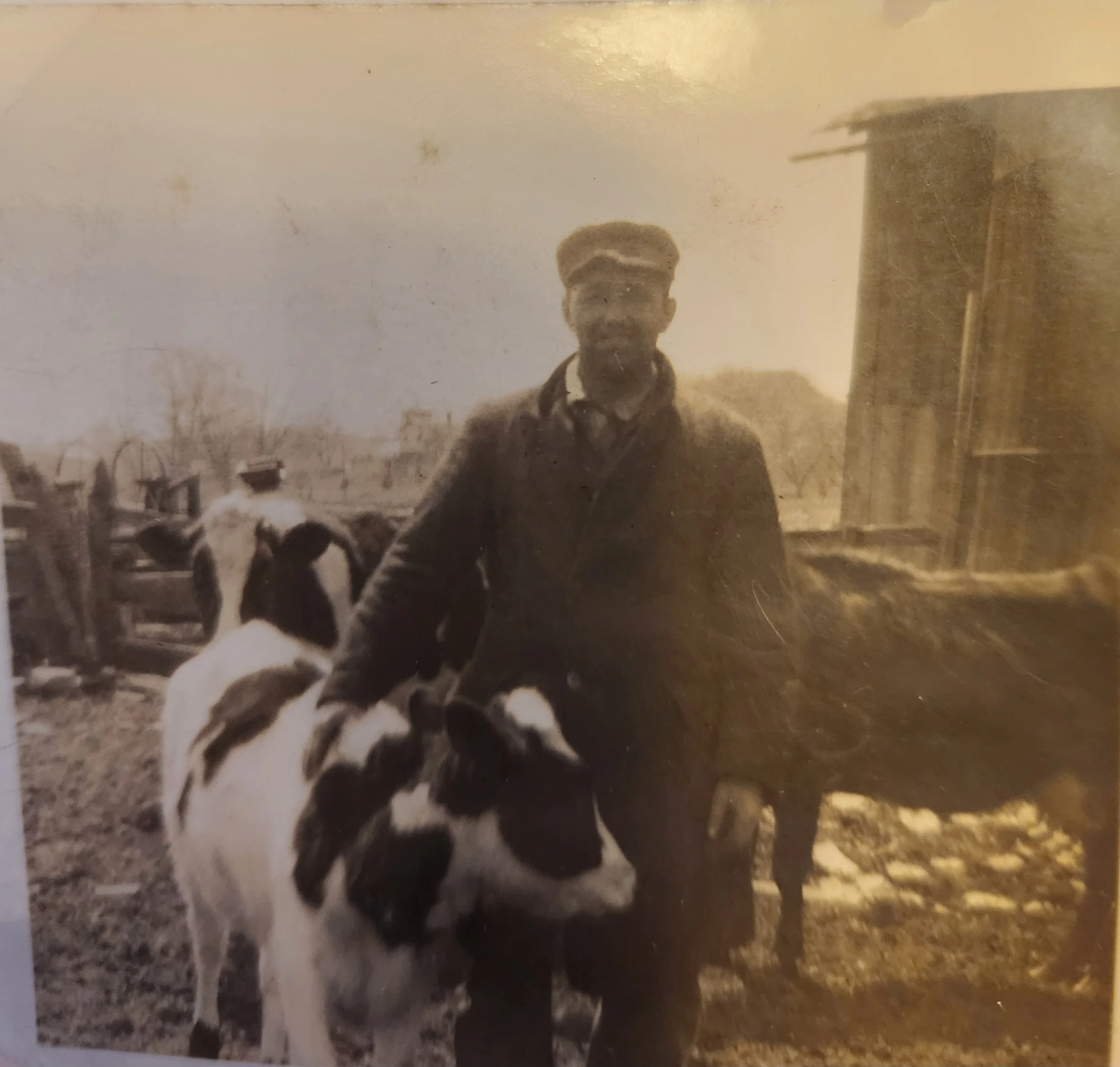
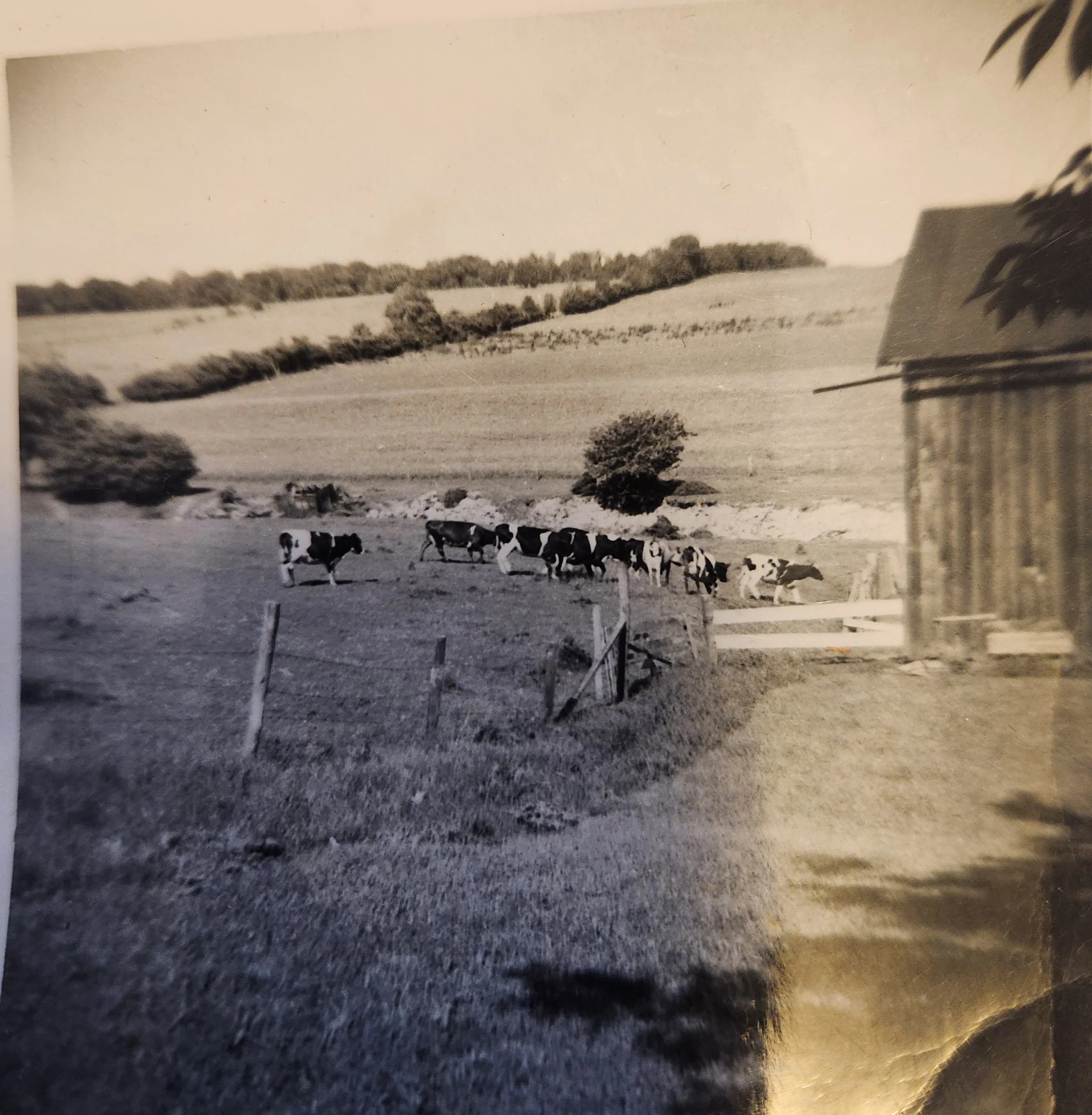
Frank Lord and his Holsteins around 1940
Frank Lord's Holstein herd
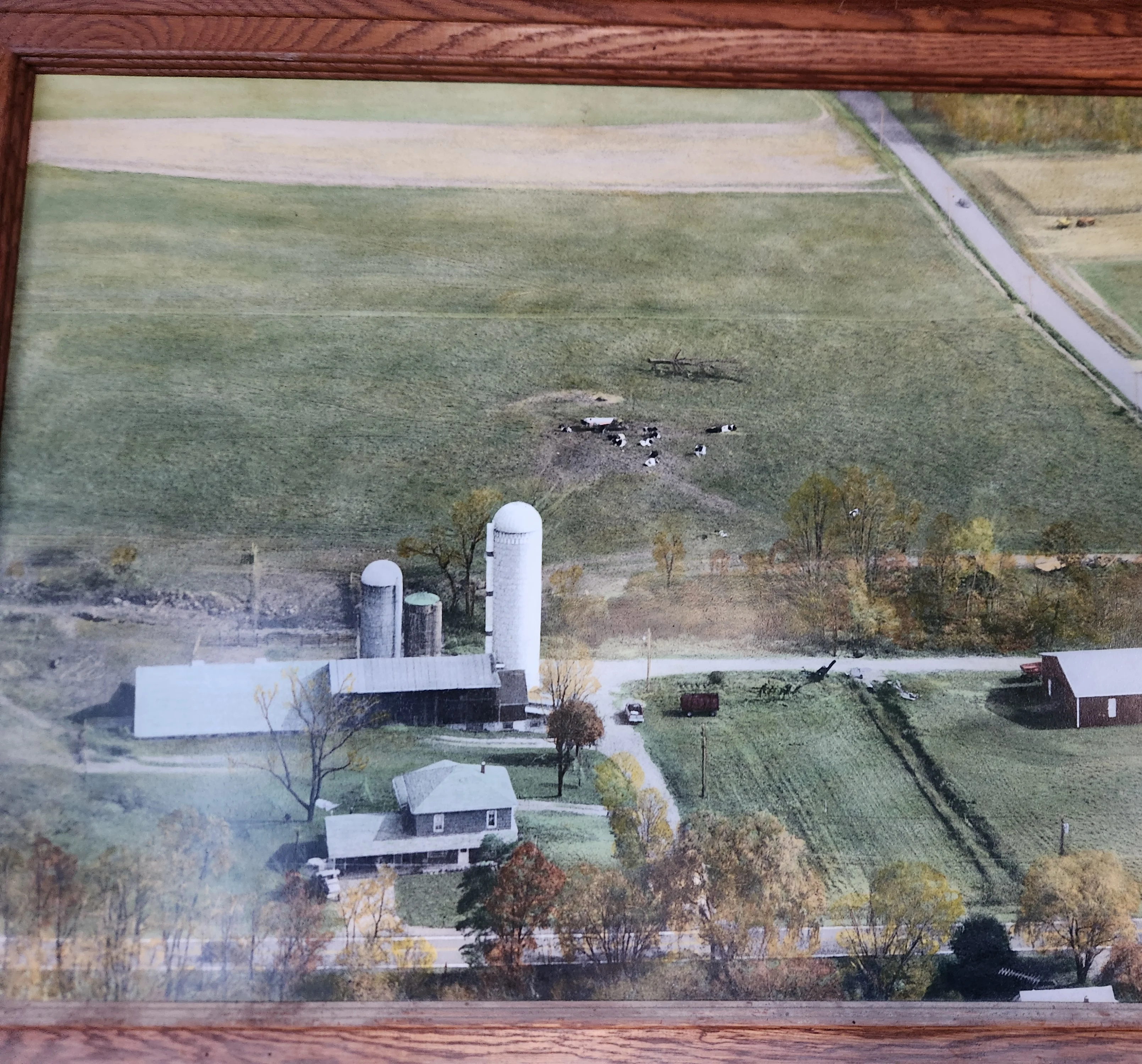
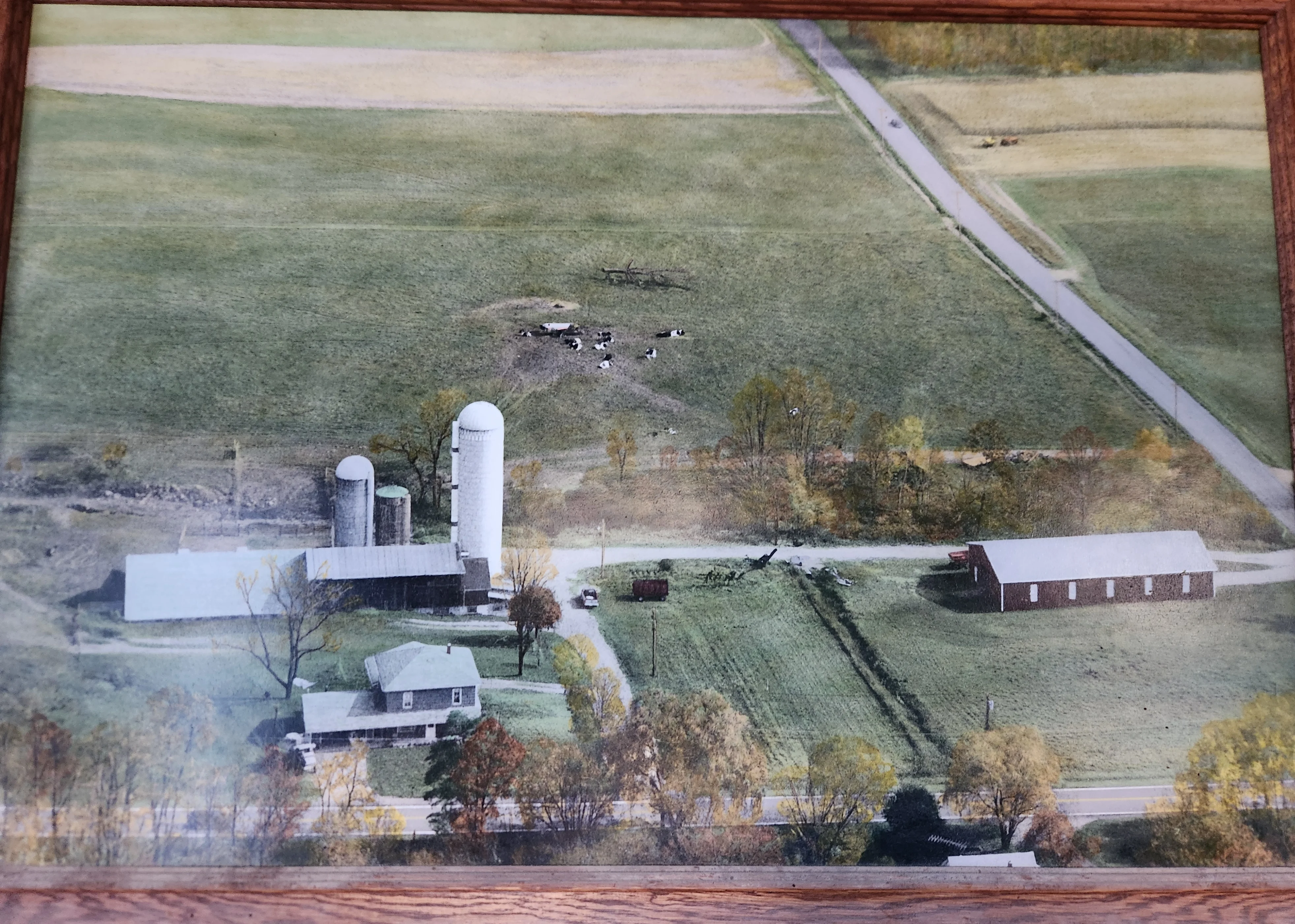
The farmstead around 1996
History
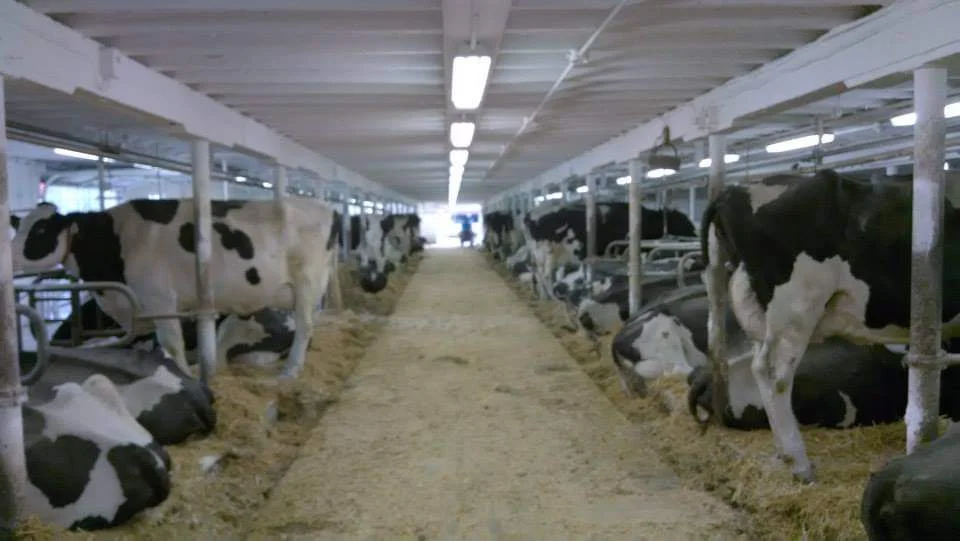
Our traditional tiestall, built in the 1800s has undergone multiple renovations throughout the years. In 2001 long day lighting, new mattresses and stalls were put in.
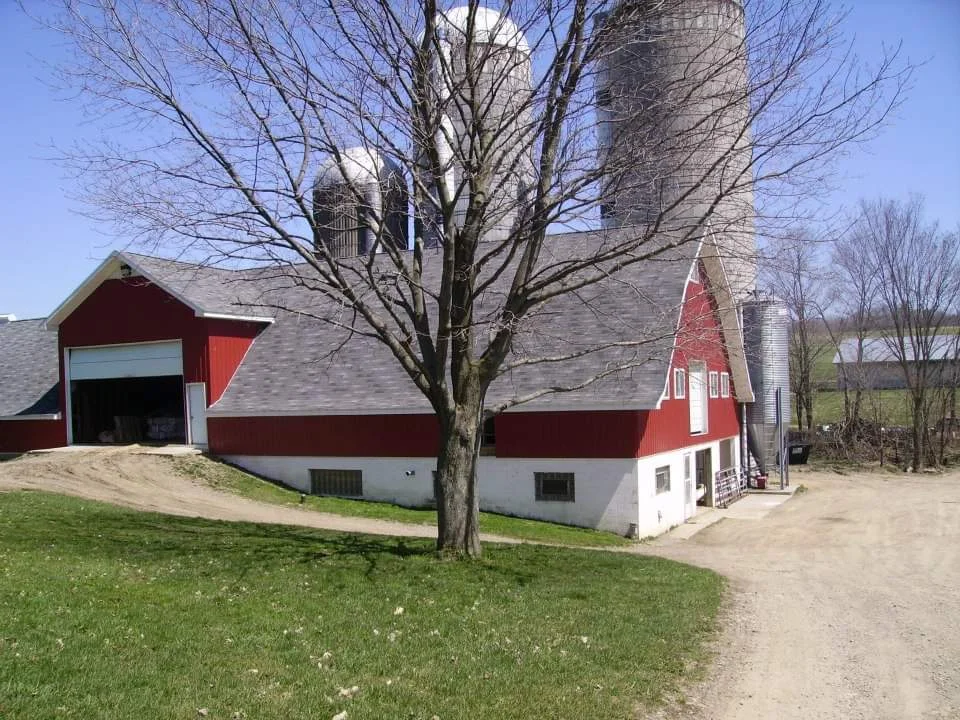
The tiestall barn underwent a complete make-over in 2001.
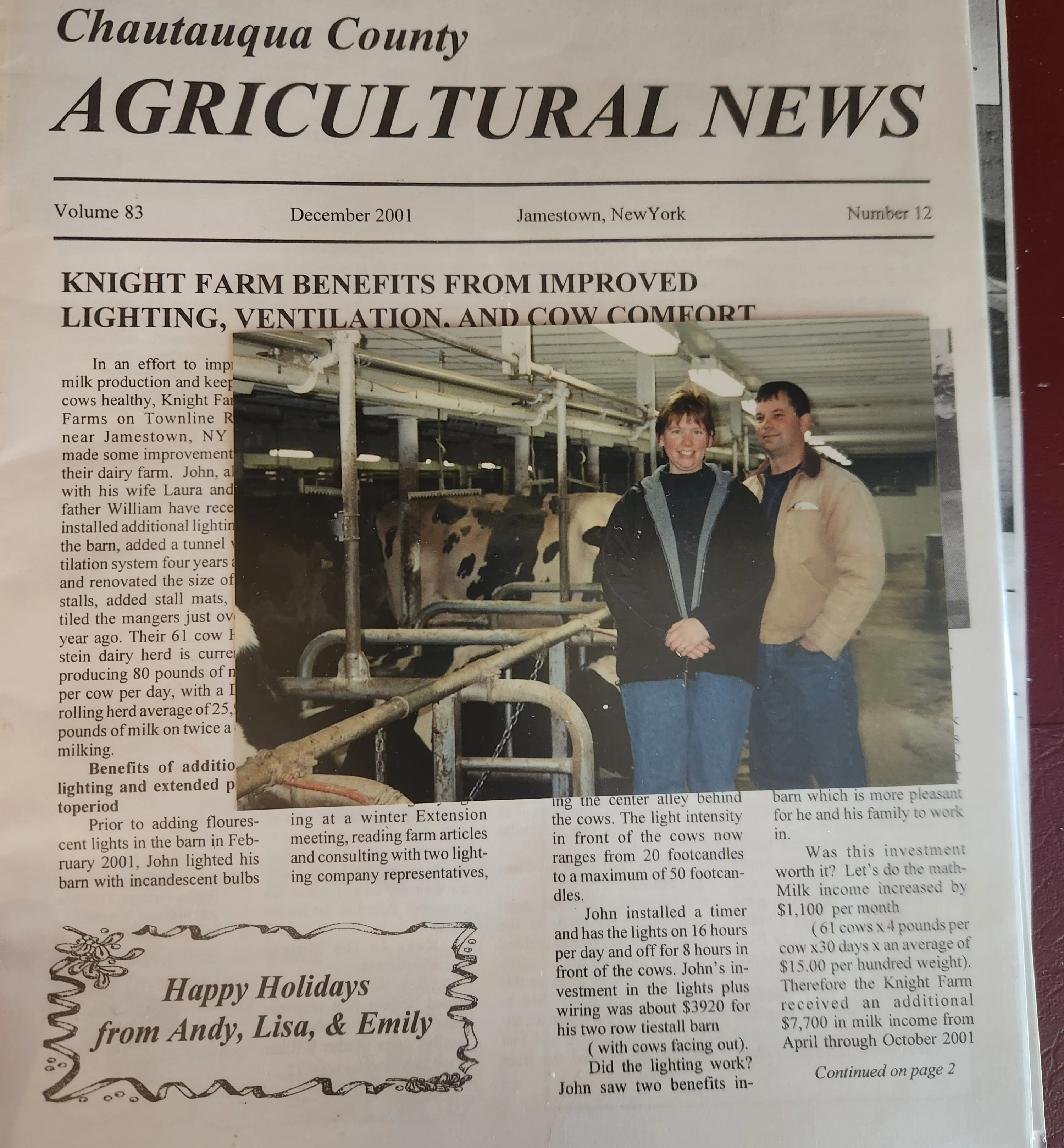
Much time, money and effort went in to the tiestall to ensure the cows were comfortable and were able to produce to their fullest genetic potential. Cows were milked 3 times a day and often reached up to 95 plus pounds of milk per cow per day.
History
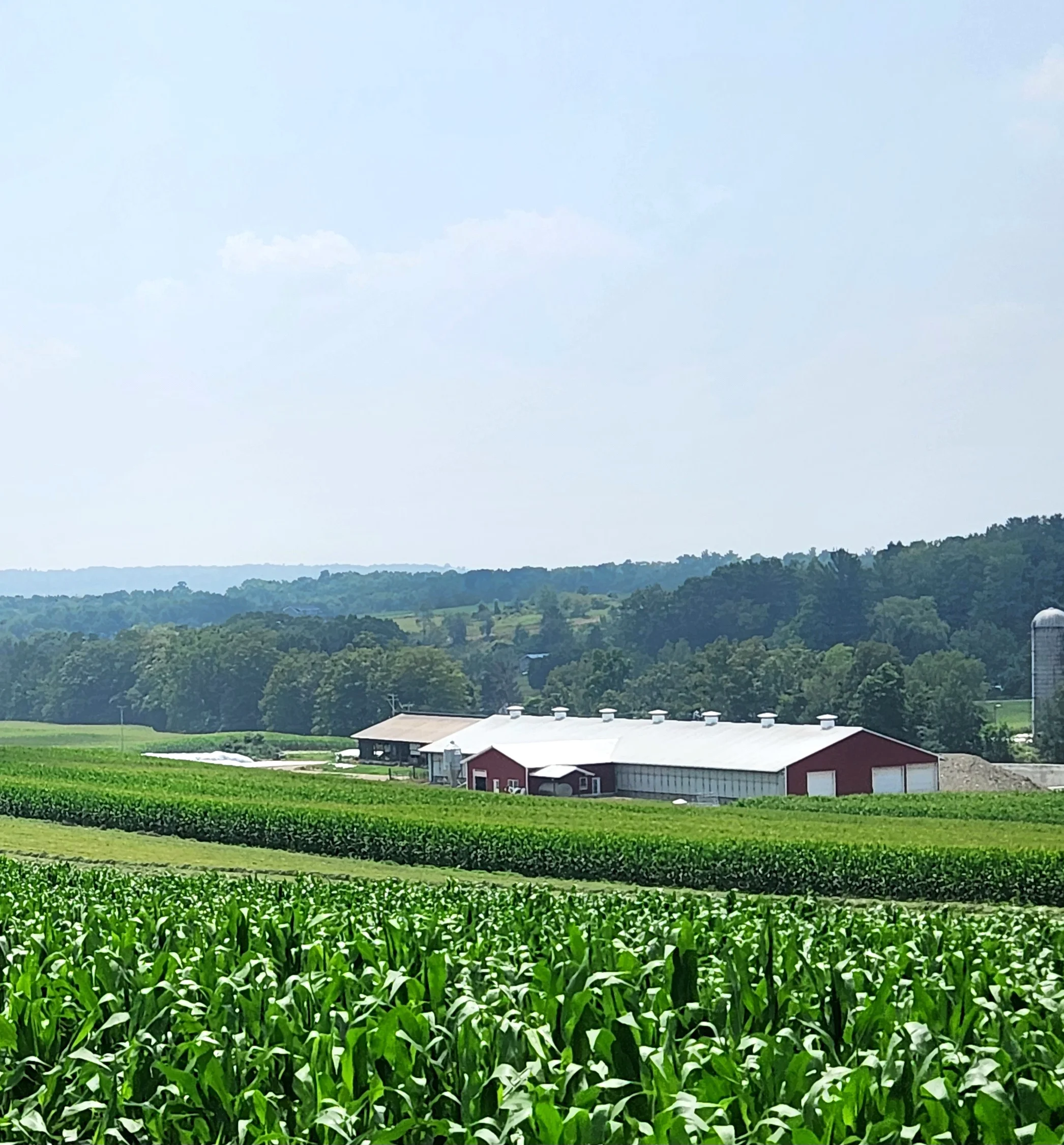
Built in 2016, the freestall, more than doubled the herd size, allowing Julia and her husband, Travis, to work full time on the farm.
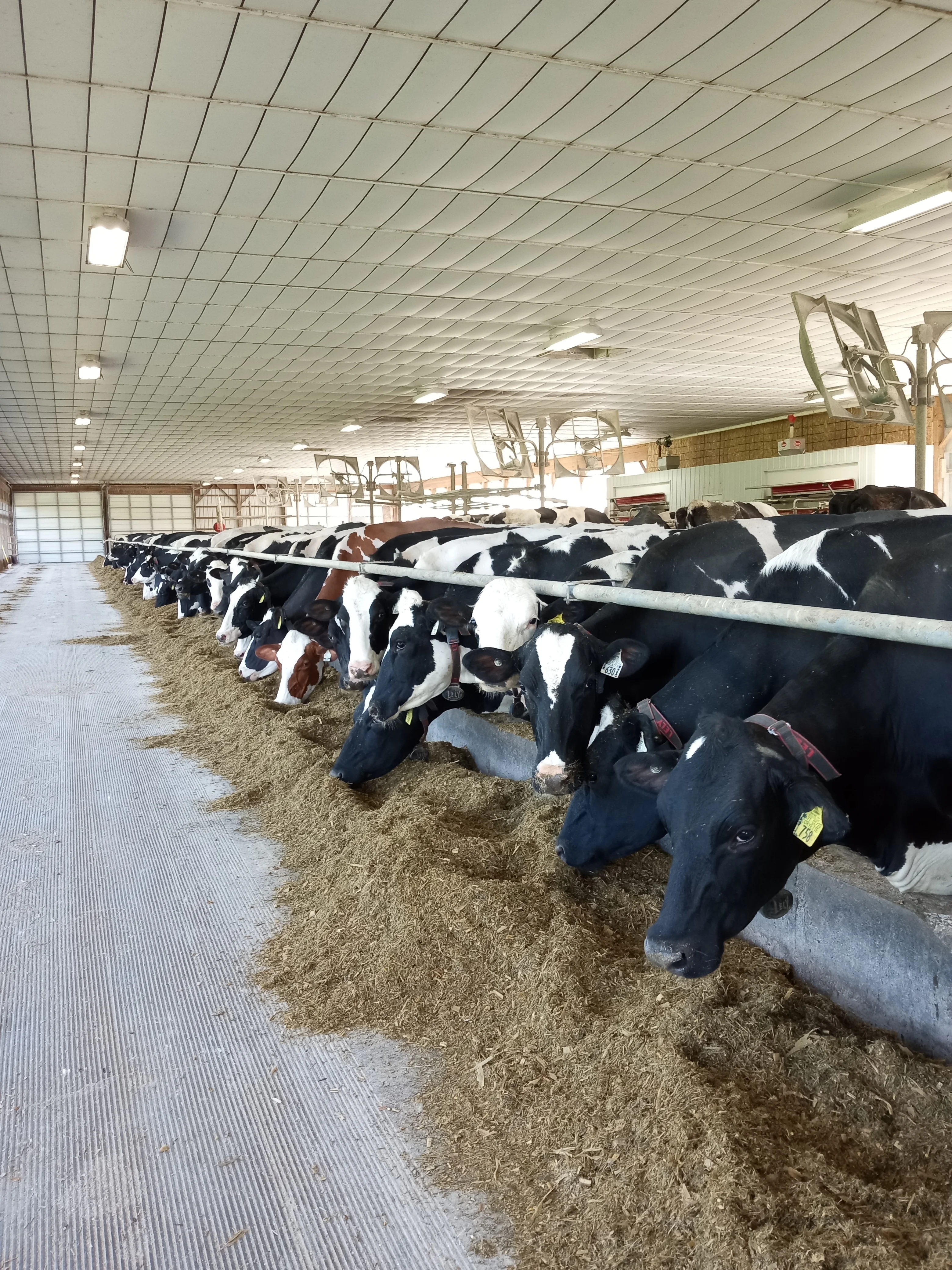
The freestall improved the farm efficiency greatly. Cows could be fed, cleaned and bedded down much faster as compared to the tiestall facility. However, we were still moving the cows down the hill 2 times daily to be milked in the tiestall.